5 min read
Choosing Between 316 and 304 Stainless-Steel Clasps
Do not choose a bracelet clasp because it simply looks silver. 316L contains molybdenum and generally handles chloride environments better; the real question is how it works with the cord, weave, and life around it.
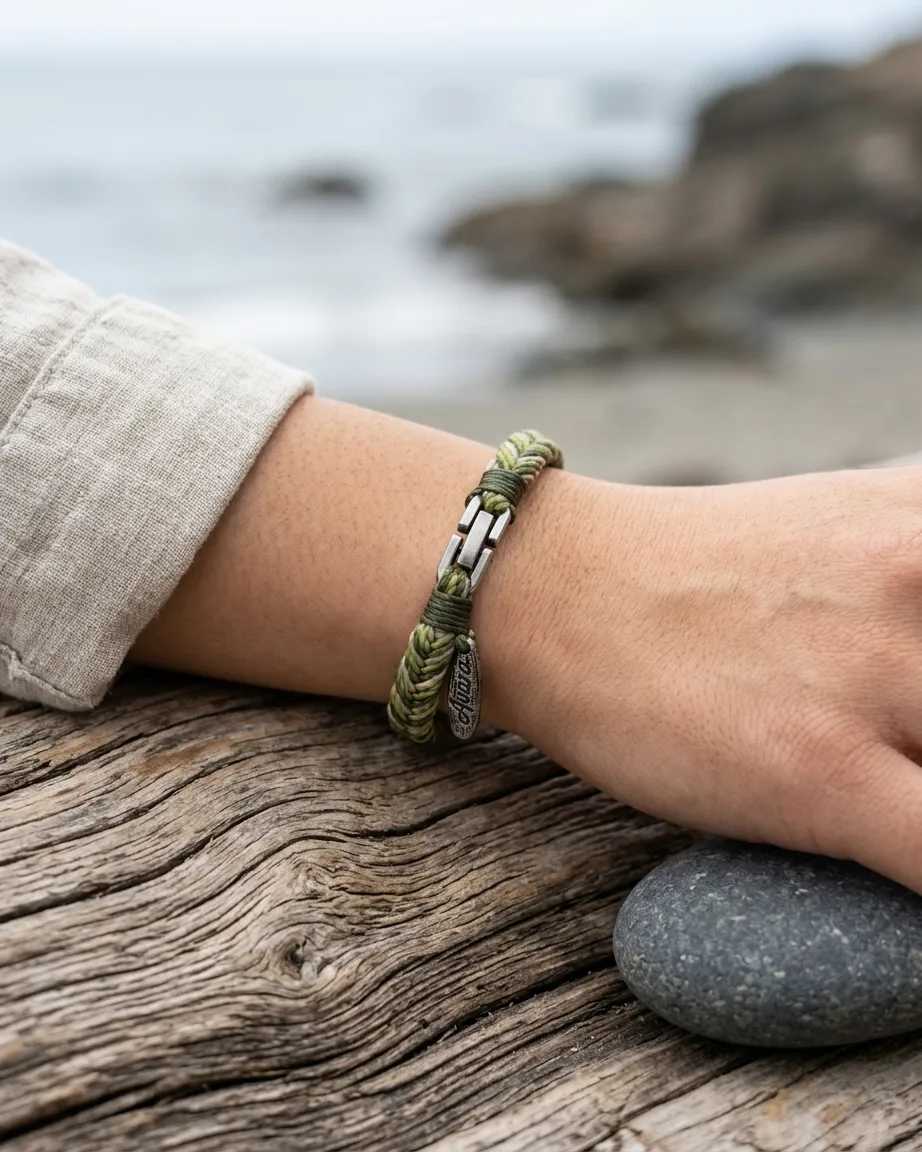
Article
Here is the short answer: 316L stainless steel contains molybdenum and generally offers better resistance to chloride corrosion than common 304. It is a material to consider for clasps that regularly meet perspiration and coastal environments.
316 and 316L are related but distinct grades. 316L has lower carbon content; one key difference concerns resistance to intergranular corrosion after welding. A supplier describing a part as 316 does not by itself confirm that it is 316L.
Beyond the grade, check surface finishing, the closing mechanism, and the connection to the cord. Real-world durability depends on the material, manufacturing quality, and conditions of use together.
After seawater, pool water, sunscreen, or cleaning products, rinse with fresh water and air-dry. Good corrosion resistance does not mean immunity in every environment.