7 min read
How to Choose Bracelet Cord: Cotton, Nylon, and Polyester Wax Cord Compared
No single cord is best for every bracelet. Cotton favors a natural hand feel, nylon favors toughness and elasticity, while polyester wax cord balances low moisture uptake, stable knots, and everyday water exposure.
Article
Choose bracelet cord by wearing context. Cotton suits a soft, natural feel. Nylon suits designs that need toughness and elasticity. Polyester wax cord is often a better fit when the goal is lower moisture uptake, defined knots, and easier recovery after everyday water exposure. The fiber name alone does not guarantee quality; diameter, twist, waxing, dyeing, and weaving tension also affect the finished piece.
Cotton is valued for its natural fiber, soft surface, and matte appearance. It works well for pieces that prioritize warmth and are not frequently immersed. Cotton also takes up more moisture, so a soaked bracelet usually needs more drying time. Sweat, seawater, and cleaning residue require thorough rinsing and ventilation.
Nylon is a family of polyamide synthetic fibers commonly valued for toughness, abrasion resistance, and elastic recovery. In bracelets it can produce a smooth, resilient feel. Nylon is not one single specification, however. Moisture behavior, light stability, and surface feel vary by polymer type and processing, so the word nylon alone does not establish durability.
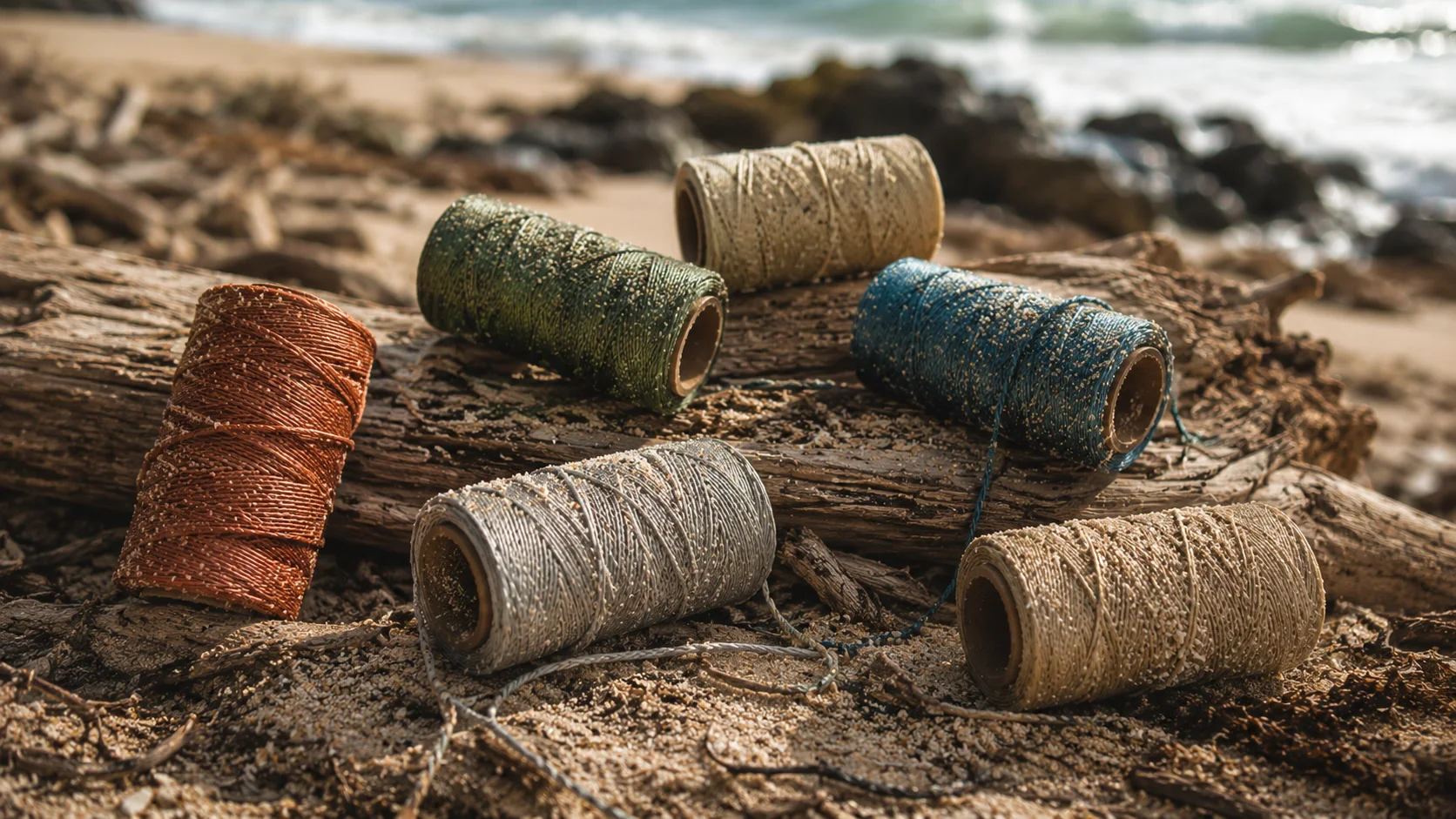
Polyester wax cord begins with polyester fiber and adds a waxed surface. Polyester has relatively low moisture uptake, while waxing adds surface control and friction, helping knots tighten and retain definition during weaving. Performance still varies with wax level, diameter, production batch, and knotting method; not every product labeled wax cord behaves the same way.
In practical terms, cotton favors natural touch, nylon favors toughness and elasticity, and polyester wax cord favors low moisture uptake, knot definition, and easier care after water exposure. This is not an absolute ranking. It is a set of tradeoffs between different design goals.
Avara Lan uses Linhasita polyester wax cord because our bracelets are intended for travel, perspiration, rain, and the coast. With our weaving method, it forms a defined pattern under consistent tension and returns readily to everyday wear after a fresh-water rinse and thorough air drying.
For Avara, water exposure does not need a complicated care routine. Linhasita wax cord and 316L stainless-steel clasps are chosen for everyday wear and coastal life. After seawater, pool water, sunscreen, or cleaning products, rinse with fresh water and air-dry.
Ask four questions when comparing bracelet cord: What is the actual fiber content? Has the cord been waxed or otherwise surface-treated? Will the piece regularly meet water? Does the maker explain cleaning and limitations? Clear answers are more useful than unsupported labels such as waterproof cord or premium material.
The best cord is not the one that wins every category. It is the one that matches how the bracelet will be used. Avara Lan chooses for coastal life and normal water exposure, while cotton or nylon may remain the more sensible choice for designs centered on natural hand feel or particular elasticity.