5 min read
Linhasita × 316L: Why These Two Materials
Brazilian wax cord meets Taiwan's seawater, supported by the corrosion resistance of 316L stainless steel. This is the reasoning behind the material choice.
Article
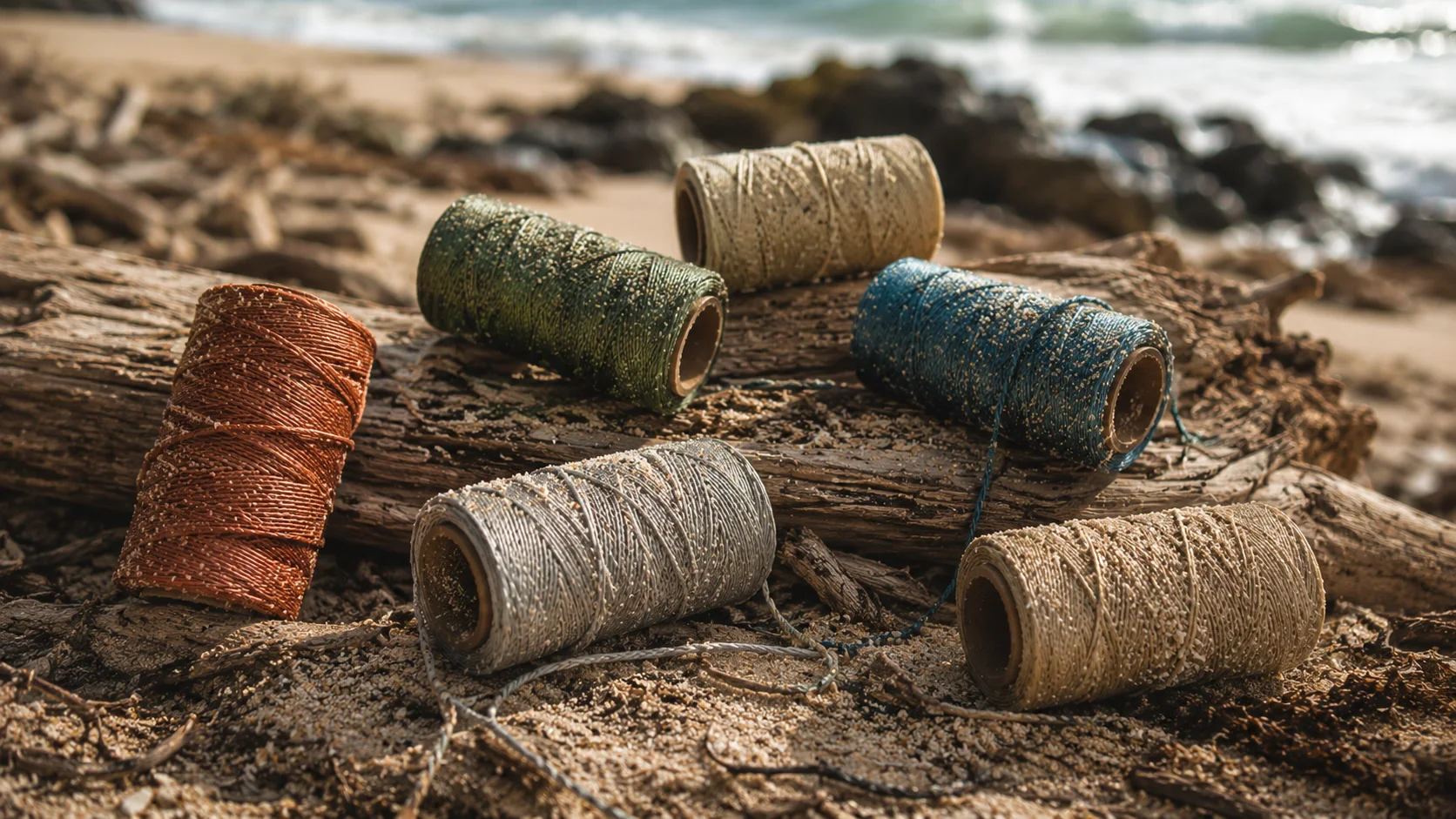
The first time I saw Linhasita cord was on a friend's workbench. I didn't know much about handmade jewelry then, but I picked up a roll of rust-orange thread, ran my fingers over it, and asked: 'What is this? Why does it feel like this?'
Linhasita is a Brazilian brand that produces polyester wax cord. Unlike cotton or nylon, its surface carries a thin wax coating — this makes the knots extremely tight and locks the color into the fiber, so it doesn't fade with water or UV exposure.
That mattered to me, because Avara Lan bracelets were never designed to be carefully protected — they were designed to live in life. Surfing, swimming, a whole summer of sunlight. The color has to hold.
The reason for choosing 316L stainless steel is straightforward. It contains molybdenum and generally offers better resistance to chloride corrosion than common 304 stainless steel. That does not make it immune to every environment, but it is well suited to jewelry that regularly meets sweat and seawater.
The phrase '316L medical steel' can sound like a single certification. More precisely, 316L is a material grade that is also used in some medical devices and body jewelry. Its real-world performance still depends on finishing, manufacturing quality, and use conditions.
Together, these materials create something suited to normal water exposure, with strong colorfastness and corrosion resistance, while retaining the warmth of handwork. That combination is what Avara Lan is trying to express: not loud, but reliable.
Understated. But it lasts.